

Women’s health advocates have called on the Lagos State Government to strengthen access to comprehensive reproductive healthcare and restore its suspended Standards and Guidelines for the Safe Termination of Pregnancy (STOP), warning that existing barriers continue to expose women to preventable health risks.
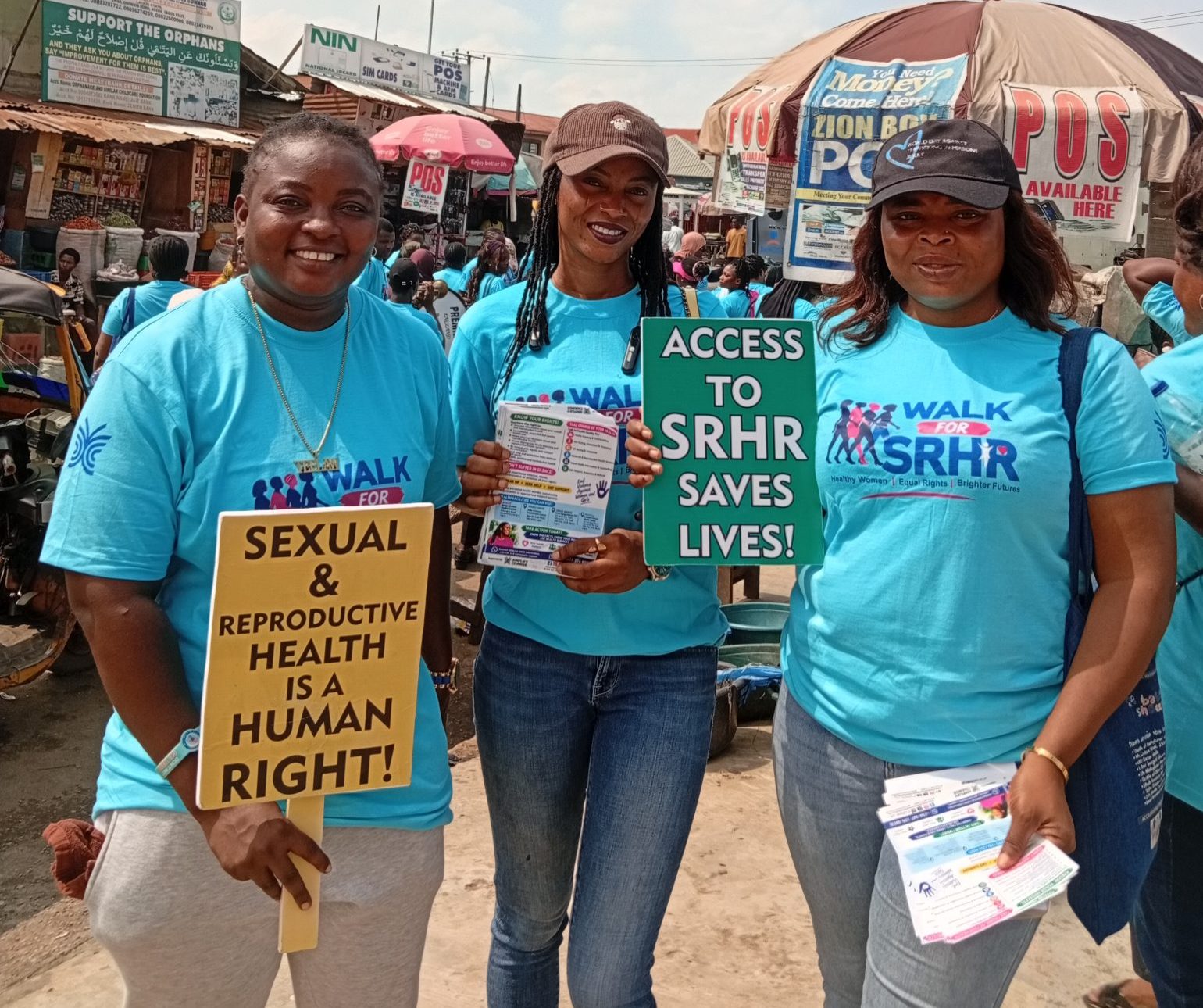
The call was made during a Sexual and Reproductive Health and Rights (SRHR) awareness walk organised by Ohotu Diamond Women Initiative (ODWI) through Oniwaya Market and Dopemu community in Agege, Lagos.
The campaign brought together community leaders, healthcare workers, women, market traders and other stakeholders to raise awareness about reproductive health rights and the importance of accessible, affordable and non-discriminatory healthcare services.
Speaking during the exercise, Dr Margaret Onah-Nnang, Project Coordinator of ODWI, expressed concern about reports of stigma, discrimination and difficulties women encounter when seeking reproductive healthcare, particularly family planning services at primary healthcare centres.
She emphasised that suspending the STOP guidelines does not eliminate the health challenges associated with unsafe procedures. Rather, it reinforces the need for clear policies, appropriate medical guidance and accessible healthcare services that protect women’s health and wellbeing.
According to her, ODWI had previously brought complaints about discriminatory treatment and charges for family planning services at some primary healthcare facilities to the attention of the Lagos State Ministry of Health. Following the intervention, the Ministry directed facilities not to charge for family planning services or stigmatise women seeking care.
She noted that community-based awareness and engagement were gradually encouraging more women to seek reproductive healthcare services, but stressed that sustained government commitment and public education remained essential.
Taking reproductive health education to the grassroots
Unlike conventional advocacy campaigns, the ODWI awareness walk deliberately took reproductive health messages directly to markets and neighbourhoods, where women and other community members could engage with the campaign.
Starting from Oniwaya Junction and Market and ending at Dopemu Palace, the exercise featured multilingual sensitisation in English, Pidgin, Hausa, Yoruba and Igbo.
Key issues addressed included family planning, contraception, sexually transmitted infections, HIV prevention, reproductive health rights and the health risks associated with unsafe abortion.
Health workers from Agege primary healthcare centres also provided free family planning services and cervical cancer screening at an outreach point. Information materials directing women to appropriate healthcare facilities were distributed during the exercise.
The initiative was supported by AmplifyChange through the Pamoja Project.
Community leaders endorse the initiative
The campaign received support from community leaders who acknowledged the importance of taking health information to the grassroots.
Julius Olugbenga Olabisi, General Secretary of Dopemu Community, commended ODWI for bringing reproductive health education directly to residents and emphasised the importance of community participation in promoting healthier decisions.
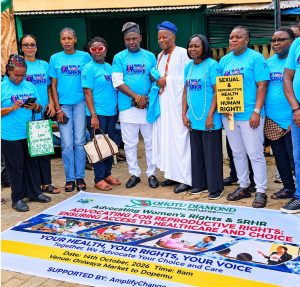
Similarly, High Shuaib Ajani Shitta, the Baale of Dopemu, welcomed the initiative and encouraged continued engagement between community leaders, civil society organisations and healthcare providers.
A call for sustained government commitment
Beyond the awareness walk, ODWI stressed that improving women’s reproductive health requires sustained collaboration among government institutions, healthcare providers, community leaders and civil society organisations.
The organisation called for the restoration of the STOP guidelines, stronger accountability in primary healthcare facilities, improved access to family planning services and an end to stigma and discrimination against women seeking reproductive healthcare.
The campaign also highlighted the importance of men’s involvement and support in family planning decisions, noting that reproductive health is a shared responsibility.
For ODWI, the message is clear: women should be able to obtain accurate health information, access appropriate healthcare and be treated with dignity and respect, without discrimination.
The organisation urged the Lagos State Government and other relevant stakeholders to translate policy commitments into practical action that improves women’s health and protects their rights.